Era Pickleball pickleball training: Endurance and Agility for Court Fitness
The court is a stage, and endurance is the backbone that keeps your movements clean when the match tightens. At Era Pickleball, the emphasis on training goes beyond swing mechanics and shot selection. It is about building a resilient body and a nimble mind that can read the court, anticipate the next move, and respond with precision under fatigue. In my years coaching pickleball, I have seen players transform when they commit to a training philosophy that treats endurance not as a side effect of practice but as a core element of performance. This piece dives into practical, field-tested approaches for cultivating endurance and agility, with a focus on the kind of sessions you might find in Era Pickleball pickleball classes and training programs.
A successful endurance plan for pickleball starts with understanding the demands of the game. The sport blends quick, explosive steps with longer, controlled rallies and rapid changes of direction. A typical point may begin with a short sprint to reach a drop shot, followed by a sequence of lateral shuffles, and capped by a precision volley that demands steady breath and stable hips. The court rewards players who can sustain a high pace for multiple points while preserving technique. The goal is not simply to last longer on the court but to stay efficient in every movement. You want to keep your groundstrokes compact, your footwork light, and your decisions sharp even when your shoulders feel heavy.
In practice, I have found that the most effective endurance work for pickleball blends cardiovascular base work with sport-specific drills. The cardiovascular base builds the engine; the sport-specific drills tune the engine to the terrain of a pickleball court. The synergy comes from pushing the body through the same patterns you use in games, but under conditions that mimic fatigue and stress. The result is a training rhythm that translates into smoother transitions, faster recoveries, and more accurate shots when the score climbs.
The Era Pickleball approach to training often begins with an assessment of where you stand. A simple baseline can reveal how much work you need and where to focus. Do you finish rallies with energy to spare, or do you crumble after the third shot exchange? Do you bend at the knees and stay light on your feet, or do your steps become telegraphed as fatigue sets in? Answers to these questions guide the program design. The aim is not to chase speed alone but to weave speed, stamina, and technique into a cohesive system. If you train with intention, your practice sessions become a living map of your progress, not a slog that leaves you frustrated.
Endurance training for pickleball should be realistic and time-efficient. Most players have limited time, and the best gains come from purposeful sessions that blend cardio, strength, mobility, and skill work. The idea is to elevate the heart rate in a controlled way, push it into higher zones during specific drills, and then allow for short, structured recoveries that keep you from collapsing into a slow jog. Through years of coaching, I have seen players gain more from two or three high-quality sessions each week than from four or five mediocre ones. The key is consistency, not perpetual intensity.
The heart of endurance work is the body’s energy systems. In pickleball, the energy demands sit along a spectrum between phosphagen and glycolytic systems for quick bursts, and the aerobic system for sustained activity. Training should respect that spectrum. Short, powerful bursts improve your ability to sprint to a ball, reach a drop with control, or finish a volley at the net. Longer, steady efforts develop your capacity to sustain rallies, keep your technique intact, and recover quickly between points. A well-rounded program alternates between these modalities so you do not bias one energy system at the expense of the others.
Season-to-season planning matters, too. In the early parts of a training cycle, the emphasis is on building a robust aerobic base and dialing in movement efficiency. As the season progresses, you shift toward higher-intensity, court-specific work that simulates match scenarios. In Era Pickleball pickleball training sessions, this translates into blocks that blend steady-state cardio with explosive drills and tactical drills that demand decision-making under pressure. The aim is to train the entire system so your body can absorb the stress of long matches without breaking down.
A practical starting point for endurance and agility work is to map out a week that balances cardio, mobility, and skill work. A sample week might include two cardio-focused sessions, one mobility and recovery day, and two technical practice days that emphasize patterns of play. The cardio sessions should be explicitly linked to court movements, not generic treadmills or bike work. You want to feel the burn in the muscles you rely on during rallies: calves, quads, glutes, hips, and the core. Mobility work keeps joints supple and protects against the overuse injuries that can derail a season. And skill work is where you translate cardio into game-ready intelligence.
An essential part of the Era program is coaching feedback. You can tell pretty quickly whether you are improving when you notice small shifts in your movement economy. Do your feet glide into the correct stance faster? Do your shoulders stay square as you rotate into a backhand? Does your breath control improve, allowing you to maintain focus through a lengthy exchange? These are subtle, but real, barometers of progress. The more you attend to these cues, the more your endurance gains will feel like calm, controlled power rather than a desperate sprint at the end of a rally.
Now, let me pause to describe a few concrete training blocks you might encounter in pickleball classes and training programs at Era Pickleball. These blocks are grounded in field-tested methods but tailored to the unique demands of pickleball play. Each block can be used independently or woven into a broader cycle. The idea is to keep the body guessing and the mind engaged, avoiding plateaus and keeping motivation high.
First, a base endurance block. The objective is to improve aerobic efficiency while preserving technique. Sessions typically begin with a dynamic warm-up that primes the hips, ankles, and shoulders for rapid changes of direction. The cardio core of the session uses continuous, sport-specific activity rather than long, monotone cardio. Think of circuit-style intervals that combine short sprints to the kitchen line, lateral shuffles along the baseline, and controlled backpedals. The rest intervals are short enough to keep the heart rate elevated but long enough to reset the form. The cool-down emphasizes mobility and diaphragmatic breathing to restore the nervous system after a high-stimulus workout.
Second, a speed and agility micro-cycle. This block hones the quickness needed for sudden changes of direction and reactive movements at the net. Sessions employ ladder drills, cone patterns, and reactive drills where a coach or partner cues a direction with a glance or a sound. The emphasis is not on raw sprint speed but on the precision of foot placement and the efficiency of the transition from one stance to another. In this work, the court becomes a training partner, and you learn to move with intent rather than effort alone.
Third, a court-specific endurance build. Here the aim is to replicate the energy cost of a long match while maintaining shot quality. You might see longer rallies with progressively higher stakes sequences—think a three-ball exchange that ends in a decision shot, followed by a quick recovery into a neutral position. The drills weave in drops and resets that keep you down on your slicing forehand and prevent you from overreaching with a big shoulder turn. The key is to stay under control as the tempo rises, then use a deliberate breath pattern to sustain the rally.
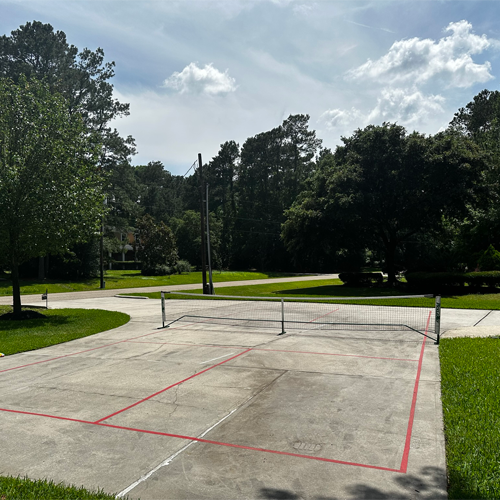
Fourth, strength and stability work tied to endurance. Strength training is not about heavy lifting for its own sake; it serves to protect joints, improve posture, and sustain performance under fatigue. Sessions combine resistance work with balance challenges that transfer to court stability. A typical module might blend single-leg variations, banded resistance patterns, and loaded carries to build a core that can hold up when your legs tire and your shoulders compensate to keep the shot on target. The benefit is a reduction in the micro-adjustments that lead to sloppy shot-making when fatigue hits.
Fifth, recovery and resilience. The best endurance programs include a deliberate recovery protocol. The body adapts to stress during rest, not during the workout itself. Recovery work can be as simple as gentle mobility and breath work, or as structured as contrast baths, soft-tissue work, and targeted stretches that address the most frequently tight areas, such as calves, pickleball rentals quadriceps, hamstrings, and the lower back. In high-performance settings, athletes track sleep quality and daily activity to ensure they are giving their bodies the chance to consolidate gains.
In the field, you will notice two kinds of athletes who excel in era-style pickleball fitness. The first champions the long game by building a durable engine. They can sustain pressure through multiple tight points and still deliver a precise drop shot or a backhand slice. The second thrives on chaotic point sequences, keeping their feet light, their hips closed, and their head up so they can pivot quickly and respond to the next move. Both types benefit from a structured endurance program, because fatigue is not simply about muscle failure. It is about the mind’s ability to stay present and the body’s capacity to maintain form under stress.
A critical part of integrating endurance and agility into your game is listening to the body. Pain is not a badge of honor and fatigue should not be confused with signals your body uses to tell you something is off. If you wake up with joint pain, a sharp fatigue that lasts beyond your warm-up, or a decline in form that persists across several sessions, it is time to adjust the load. That might mean reducing the volume, swapping a high-intensity day for a mobility-focused session, or giving yourself a day or two of active recovery. The Era approach respects the balance between pushing limits and preserving long-term health. The sport rewards players who treat training as a process rather than a series of isolated sprints.
When you walk into a pickleball class at Era Pickleball, you will notice that training culture is built around practical, observable outcomes. The coaches place a premium on movement efficiency and on the mental game of endurance. They teach you to read the rally, anticipate the next shot, and reset your breath so your decision making stays crisp even after a long rally. The sessions emphasize consistent footwork, compact strokes, and the ability to transition seamlessly from defense to offense, back to defense, and so on. It is the kind of training that makes you feel capable on the court even when fatigue rises, and it translates into more wins, fewer unforced errors, and a quieter, more confident mind during critical points.
If you are evaluating pickleball training programs for endurance and agility, here are some practical signs that a program is well aligned with the demands of the sport. First, the plan uses court-specific drills rather than generic cardio. Second, the coaching includes feedback on footwork, body positioning, and shot timing under fatigue. Third, the programming alternates intensities in a way that mirrors match tempo rather than simply piling on volume. Fourth, there is a clear emphasis on mobility and injury prevention, not just strength. Fifth, you can point to concrete improvements in rally length, shot accuracy under pressure, and recovery times between points. These markers indicate a thoughtful approach that recognizes pickleball’s unique blend of speed, precision, and stamina.
Throughout the journey, it helps to keep a simple record of your progress. A small notebook or a discreet digital log can track the days you trained, the duration and intensity of each session, and how you felt on the court afterward. A few lines about your perceived effort, your breath control, and your shot outcomes can reveal patterns over time. Over weeks and months, you will notice a lessening of the fatigue between points, quicker repositioning after a rally, and more reliable serves into the corners of the service box. These improvements are tangible and motivating. They also demonstrate that the endurance and agility work you put into Era Pickleball pickleball training is creating a durable platform for your game.
The social aspect of training should not be underestimated. The best aerobic and agility gains occur when you train with other players who share your standards and push you to maintain technique in the face of fatigue. In Era Pickleball classes, you often find a mix of players from different backgrounds who bring unique styles to the court. A good training partner helps with tempo, creates realistic rally pressure, and holds you accountable to the movement patterns you are trying to ingrain. The dynamic there is constructive rather than competitive in a way that undermines your learning. When the energy is right, you push just enough to break a sweat without losing form.
To close, I want to underscore a few practical takeaways that players can carry into their own practice. Endurance in pickleball is not a single skill but a constellation of capabilities that work in concert. It is the rhythm of breath, the economy of movement, and the confidence that comes from knowing you can maintain technique through a long, demanding rally. The best training plans wrap a clear purpose around each session, rotate through different intensities, and preserve a reliable path to recovery. They respect the body as a whole and treat the sport as a test of both physical and cognitive resilience.
If you are curious about how Era Pickleball pickleball training can help you build endurance and agility, consider trying a few sessions focused on the elements described here. Start with a base endurance workout, add a speed and agility micro-cycle, and then weave in court-specific endurance blocks that mimic the flow of a match. Pair these with strength and mobility work, and you have a practical, durable framework for year-round improvement. The aim is not to burn out in the first month but to form a sustainable pattern that keeps you improving, point by point, practice by practice.
In the end, the best pickleball training is honest about its limitations and clear about its goals. It celebrates the small wins and maintains a steady pull toward consistency. Endurance and agility are not glamorous in the short term, but they yield the most meaningful gains on the court. When you can glide into the kitchen, cut off an opponent’s angle with a controlled step, and finish a rally with a precise, economical shot, you have built something lasting. That is the essence of Era Pickleball pickleball training: a practical, disciplined approach to fitness that respects the sport's rhythm and helps you play at your best for longer stretches.
Two practical formats you can take to the court this week, if you are not yet in Era Pickleball classes, are below. They are compact enough to fit into a busy schedule and focused enough to deliver tangible gains. Use them as templates, then tailor them to your own rhythm and needs.
- A five-move core endurance circuit you can run after warm-ups, designed to keep your heart rate elevated while reinforcing movement quality.
- A five-drill agility sequence that emphasizes court coverage and prompt decision making, with built-in reflective moments to assess form and timing.
These small, focused pieces of programming can accumulate into meaningful progress when performed consistently. The fruit is not a sudden sprint but a steady improvement in how you carry yourself on the court, how you breathe, and how you convert fatigue into reliable execution. In the final analysis, that is the core of endurance and agility for court fitness—the ability to stay present, move cleanly, and finish points with precision, regardless of how long the match lasts.